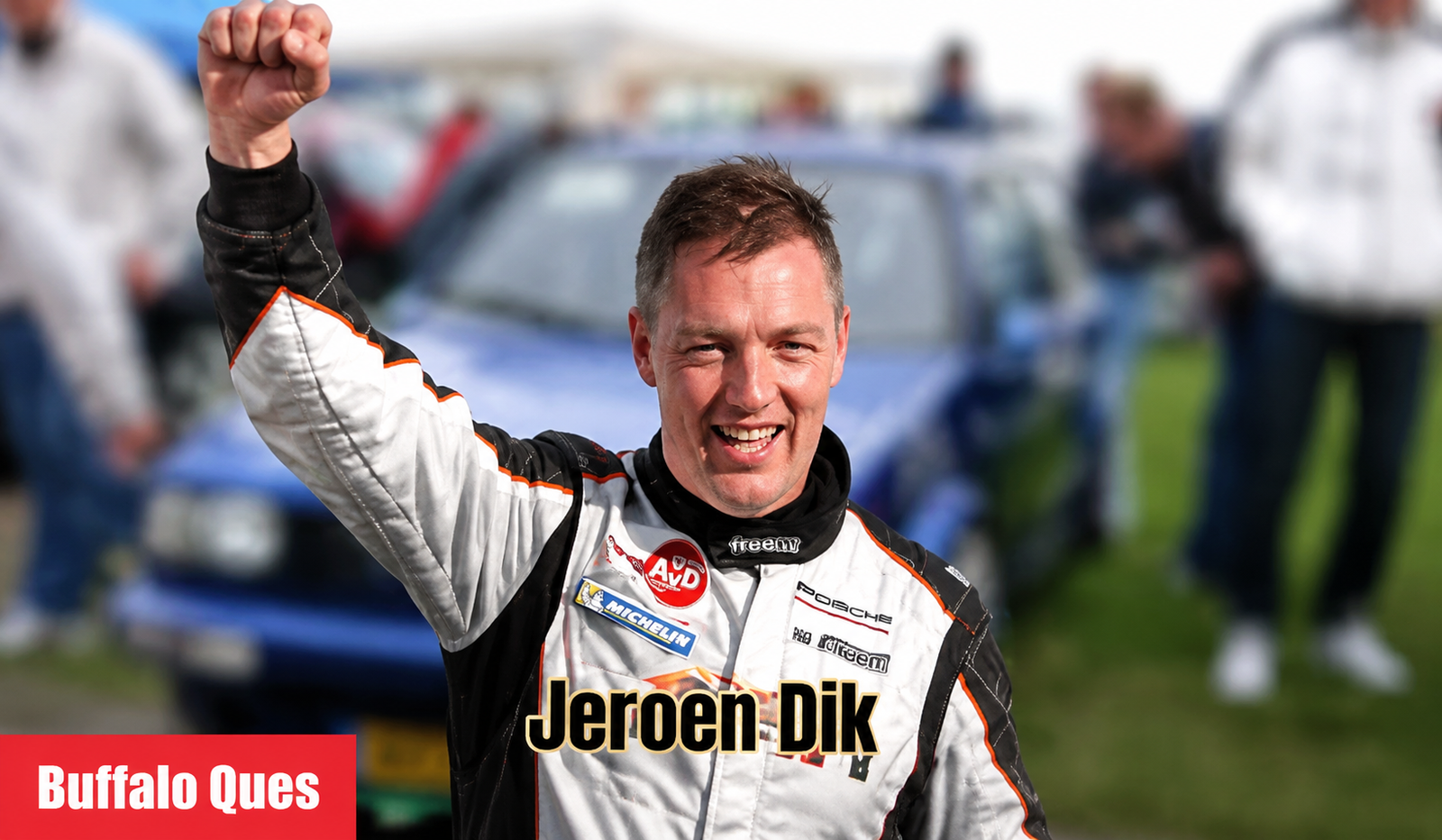
Have you ever wondered who tunes the cars that Volkswagen, Audi, and Seat fans trust the most in Europe? Ask that question in the right forums, and one name comes up again and again. That name is Jeroen Dik.
Jeroen Dik is the founder of JD Engineering, a tuning workshop based in Lochem, Netherlands. He is not a movie star or a household name. He built his standing the slow way, through years of hands on work rather than hype.
What makes his story worth telling is not just the workshop he built. It is the racing career sitting right beside it. He did not only build strong engines for other people. He got behind the wheel himself and tested his own work on the track, season after season.
This article walks through what is actually known about him, sorting the parts of his story that hold up from the parts that do not.
Profile Overview
| Detail | Information |
|---|---|
| Full Name | Jeroen Dik |
| Date of Birth | March 13, 1969 |
| Nationality | Dutch |
| Known For | Founder of JD Engineering, engine tuning expert, former touring car racer |
| Company | JD Engineering |
| Company Base | Lochem, Netherlands |
| Brands Serviced | Volkswagen, Audi, Seat, Škoda, select Porsche models |
| Racing Series | Toerwagen Diesel Cup, Dutch Race Driver Organisation Diesel class |
| Biggest Racing Win | 2011 Toerwagen Diesel Cup champion |
| Career Race Record | 64 races started, 12 wins, 24 podiums, 7 poles |
| Nickname | “Tuning Yoda” |
Who Is Jeroen Dik?
Jeroen Dik is a Dutch car tuner who founded JD Engineering, a workshop in Lochem, Netherlands, known for improving engine power and reliability on Volkswagen, Audi, Seat, and Škoda cars. His main skill is ECU remapping, changing a car’s engine software so it runs stronger while staying safe for daily driving.
Inside the world of VAG tuning, a term covering Volkswagen, Audi, Seat, and Škoda vehicles together, his name carries weight. Enthusiasts often call him the “Tuning Yoda.” The nickname did not start as marketing. It traces back to a 2012 feature by the motoring site Speedhunters, where a writer visiting the workshop noted that people in the scene already used the name.
He also holds a place in Dutch motorsport. He raced for several seasons in the Toerwagen Diesel Cup, a Dutch touring car series for diesel cars, and became champion in 2011, a title that followed a painful loss the year before.
His name did not spread through interviews or social media. It spread through his workshop, his race results, and a handful of outside motoring reports.
Early Interest in Engines
Little is known about his childhood. What several sources agree on is that he grew up in the Netherlands and took an early interest in cars and engines, the kind of curiosity common in people who later become skilled mechanics.
His focus centered on the Volkswagen Golf fitted with the G60 supercharged engine, a car that was popular but difficult to tune well in the 1990s. Getting strong, dependable results from a G60 took patience, and many hobby tuners at the time struggled with it.
Beyond this, no record covers his family background, his schooling, or his exact birthplace. Some websites claim he was born in Lochem, but that detail is unconfirmed. Lochem is where his business sits, not necessarily where he was born.
He has always kept a low profile, common among people who build a career through steady work rather than public attention.
Building JD Engineering From the Ground Up
Jeroen Dik began tuning cars in the 1990s, and his early work with G60 engines became the foundation for everything that followed. One project from this time, a tuned Volkswagen Golf Mk1 16V G60, was linked to sprint race wins that helped his name travel through Dutch and wider European tuning circles.
That early skill grew into a full business. He founded JD Engineering in Lochem, with the workshop later linked to Hanzeweg, a street in the town. The name of the company is straightforward. JD stands for his own initials.
JD Engineering built its name on ECU remapping for Volkswagen, Audi, Seat, and Škoda cars, later adding select Porsche models. Instead of using the same tuning file for every car, the workshop built custom settings around each vehicle.
What set JD Engineering apart from many rival shops was its focus on everyday driving. Rather than chasing the highest possible horsepower figure, the company aimed for smooth torque delivery and long term reliability. A car tuned there was meant to feel just as good on a Tuesday commute as it did on a test bench.
Inside the Workshop, According to an Outside Writer
In 2012, the motoring site Speedhunters published a firsthand account after visiting JD Engineering’s shop. The piece followed a UK crew, called Players, who brought a car in for tuning.
It described technical, unglamorous work. The team drilled a hole and welded in a fitting so a probe could measure the air and fuel mix correctly. A test ECU was hooked up to a laptop to monitor the engine during each run. The car was strapped down while its exhaust gases were pulled through the floor and out through a vent on the roof.
At one point, after a few runs fell short of what the team wanted, they called Jeroen Dik in directly. With each attempt after that, he pulled a little more power from the engine.
This visit gives one of the clearest public glimpses of him at work. He was not simply running the business from an office. He was still on the shop floor, troubleshooting engines himself, years into the company’s life.
Jeroen Dik’s Racing Career
He did more than tune cars from a workshop bench. He also raced them, competing in the Toerwagen Diesel Cup, a Dutch touring car series built for diesel powered cars.
His time in the series goes back to at least 2008, based on race reports from that period. Over the following seasons, he became one of the more consistent drivers in the field, built race by race rather than through a single lucky result.
The Season That Almost Was: 2010
The 2010 season is one of the harder chapters in his racing story. Driving a Volkswagen Golf 6, he won seven races that year and stayed in the title fight all the way to the final rounds at Circuit Park Zandvoort.
He finished as runner up, losing the championship by a single point. For a driver who had already shown he could win again and again, that kind of finish is hard to shake off. It also set up one of the better comeback stories the series would see.
Winning It All in 2011
New rules ahead of the 2011 season meant his Golf 6 would need costly changes to stay eligible. Rather than pay for those changes, he switched to a Volkswagen Golf 5, starting the year with a different car than the one he had come so close with.
The switch did not slow him down. By the fourth race, he already led the standings with 62 points. At the Profile Tyrecenter Pinksterraces in June, he pulled off one of his best drives of the year, moving up from tenth place to win a race that ran close to 100 minutes over 47 laps.
In August, at the RTL GP Masters of Formula 3 weekend at Zandvoort, he won again, crossing the line 0.527 seconds ahead of rival Maik Barten. That margin points to a driver in full control rather than one relying on luck.
The title was decided at the Formido Finaleraces at Zandvoort. Jeroen Dik arrived with a points lead and only needed a solid finish in the first race to seal it. He finished second, which was enough. He closed the season with 211 points, ahead of Ferdinand Kool and Henry Zumbrink on 168, and Ronald Morien and Dennis de Groot on 166.
Winning the 2011 Toerwagen Diesel Cup meant more because of what had happened the year before. Losing a title by one point and coming back to win it outright the following season says something about how he handled that setback. He did not start over. He simply kept going.
Racing Beyond the Championship
He kept racing after his title win. In 2013, race reports show him competing in the Dutch Race Driver Organisation’s Diesel class at Zandvoort. He won his class in two separate races and finished first overall in one event, despite sharing the grid with cars from other classes.
According to Driver Database, a motorsport records site, his career includes 64 race starts, all 64 finished, 12 wins, 24 podium finishes, and 7 pole positions, with a 0 percent DNF rate. That last number stands out on its own. A driver who finishes every race he starts is showing something beyond speed. He is showing the same care that shaped his tuning work.
The Man Behind the Nickname
The name “Tuning Yoda” shows up constantly wherever Jeroen Dik is mentioned. Its origin traces back to the 2012 Speedhunters visit, where a writer noted the nickname was already in use among people in the tuning scene. Over time it became shorthand for his reputation: deep technical knowledge paired with a calm, patient way of solving problems.
One thing is worth flagging directly. Several websites attach bold, quotable lines to him as though he said them himself. The same catchy phrases about performance and reliability turn up across different sites, word for word. None of these can be traced to him, and at least one site misquotes the original Speedhunters piece entirely. What actually holds up about his career does not need invented lines attached to it.
His Life Outside the Workshop
Jeroen Dik keeps this part of his life to himself. There is no public record covering his family, his relationships, or how he spends time away from the workshop and the racetrack.
That gap fits the rest of his public profile. Even sources that dig hard for personal detail come back empty handed. It reads less like a mystery and more like a simple boundary he has chosen to keep, and that choice belongs to him.
Why Jeroen Dik’s Story Still Matters
His mark on the tuning world goes beyond any single win or engine build. He helped shape a way of thinking where usable power matters more than the biggest number on a dyno sheet. For Volkswagen, Audi, Seat, and Škoda owners across Europe, JD Engineering has stayed a trusted name for more than three decades.
His racing record backs up that approach better than any slogan could. A tuner who races his own cars, finishes what he starts, and returns from a one point loss to win a title the next year has already tested his ideas where it counts, on the track.
Final Thoughts
Jeroen Dik’s story never needed to be loud. It is the story of a Dutch mechanic who turned an early interest in engines into a respected tuning business and a genuine racing career, built one season at a time. Through JD Engineering, he has spent decades helping car owners get dependable power from their vehicles without giving up safety.
He may not be a household name outside the world of car enthusiasts. But within it, the trust in his name came the hard way, through results that still hold up when you look closely.
You may also read: https://buffaloques.com
